Posts

Teresa de Ávila, "Vuestra Soy"

Image
Vuestra soy, para Vos nací, ¿qué mandáis hacer de mí? Soberana Majestad, eterna sabiduría, bondad buena al alma mía; Dios alteza, un ser, bondad, la gran vileza mirad que hoy os canta amor así: ¿qué mandáis hacer de mí? Vuestra soy, pues me criastes, vuestra, pues me redimistes, vuestra, pues que me sufristes, vuestra pues que me llamastes, vuestra porque me esperastes, vuestra, pues no me perdí: ¿qué mandáis hacer de mí? ¿Qué mandáis, pues, buen Señor, que haga tan vil criado? ¿Cuál oficio le habéis dado a este esclavo pecador? Veisme aquí, mi dulce Amor, amor dulce, veisme aquí: ¿qué mandáis hacer de mí? Veis aquí mi corazón, yo le pongo en vuestra palma, mi cuerpo, mi vida y alma, mis entrañas y afición; dulce Esposo y redención, pues por vuestra me ofrecí: ¿qué mandáis hacer de mí? Dadme muerte, dadme vida: dad salud o enfermedad, honra o deshonra me dad, dadme guerra o paz crecida, flaqueza o fuerza cumplida, que a todo digo que sí: ¿qu...

Владимирская икона Божией Матери

Image
Иконографически Владимирская икона относится к типу Елеуса (Умиление). Младенец припал щекой к щеке Матери. Икона передаёт полное нежности общение Матери и Ребёнка. Мария предвидит страдания Сына в Его земном пути. Отличительная особенность Владимирской иконы от прочих икон типа Умиление: левая ножка Младенца Христа согнута таким образом, что видна подошва ступни, «пяточка». Оборот На обороте изображены Этимасия (престол уготованный) и орудия страстей, относимые очень приблизительно к началу XV века (времени второй починки иконы). Существуют версии, что икона ещё с самого начала была двыфаей: об этом говорят одинаковые формы ковчега и лузги обеих сторон.  Датировка и сохранность По оценкам искусствоведов, икона написана в XII веке, предположительно, вКонстантинополе. Первоначальный размер иконы 78×55 см. Позже были нарощены поля. На протяжении своей истории была записана, по меньшей мере, четыре ра...

The Church in Iraq

Image
In Iraq the very survival of one of the world’s oldest Christian communities now hangs in the balance. Continuing attacks against the faithful have prompted successive waves of emigration. According to UN reports in 2010, of the 1.6 million Iraqi refugees abroad, up to 40 percent were thought to be Christians. According to some of the country’s most senior bishops, over the past decade the number of Christians haemorrhaged from nearly 900,000 to perhaps fewer than 200,000, a rate of decline far steeper than official figures suggest. By 2011, some sources gave an even lower figure for the number of Christians left in Iraq. Nor does there seem any end in sight to the problem, with Christian emigration continuing unabated. Catholic leaders said the number of Christians remaining in Baghdad by early 2011 would be a mere fraction of the 200,000 living there at the start of 2003. Even more Christians fled the city after the 31st October 2010 siege of Baghdad’s Our Lady of Salvation Syr...

Георгий Свиридов

Image
Святый Боже ('Holy God') Зарю бьют ('Dawn Strikes') The dawn beats. From my hand my shabby copy of Dante falls to the ground. On my lips, the half-pronounced verse ceases to shape meaning. - My soul flies far off. - Familiar, everyday living sound, although you often radiate far out, I shrink away - into my silent sense of age. 'Pastoral'

Mina - Questa Canzone

Image

P. A. Florenskij, "The Friendship Star"

Image
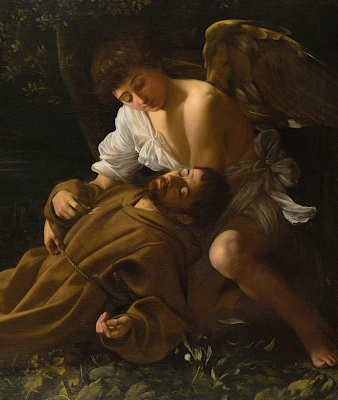
Звёздная дружба  The ecstasy of St Francis of Assisi На мотив из Платона Душа себя найти желает. Томится по себе самой. Тоскливо по себе вздыхает и плачет в горести немой. Дрожащий в тусклых очертаньях пред ней витает мир идей, и Эрос, – мощный чародей, – Душой во сне или в мечтаньях в какой-то миг овладевает. Душа томится и рыдает. И вот почудилось, что снова Душа-близнец ей найдена. Полёт в Эфир свершать готова на белых крыльях не одна. Но сон проходит, и тоскливо она взирает вкруг, стеня. И шепчет страстно-сиротливо: «найди меня, найди меня...» (1905) *   *   * On a motif from Plato The ecstasy of St Bernard of Clairvaux Desiring to find itself, the Soul languishes by itself, sighs wistfully by itself  and cries in sorrow, silent. Tremulous in dim outlines, hovering below her world of ideas, Eros, - a mighty magician, -  and the Soul in dream.  The Soul seizes, as in some instant,...

Perfection is never stopping our growth

Image
"If anyone says that good is difficult to attain – for the Lord of creation is alone immutable while human nature is mutable and inclined to change – how can a mutable nature realize what is fixed and stable in the good? My response is that a person who does not lawfully strive in a contest cannot be crowned (1Tim 2:5); he would not be a legitimate athlete if an opponent were lacking.  Without an opponent there is no crown, for victory against oneself is lacking if there is no weakness. Hence, let us struggle against our nature’s mutability as though against an adversary; wrestling with our reason makes us victors not by ca6ting it down but by not consenting to the fall. Man can change not only for evil; if he had a natural inclination only to evil it would be impossible to turn to the good … Perfection consists in never stopping our growth towards the good nor in circumscribing perfection."  St Gregory of Nyssa, On Perfection ,  J213-4.